
What I Learned Curating My First Solo Exhibition: Part 2
Nov 06, 2026
By Craig Turner-Bullock
In Part 1 I wrote about choosing the images and how the room shaped the show. That part was calm, desk-based planning. This one is the opposite! In part 2 of this series I'll talk about a shipment that seemed to go missing, an unexpected week in hospital, a build day that ran late, and some very dubious hooks!
Part 2: Getting it all on the wall
Where's the rest of my order?
My prints were shipped from Whitewall in Germany, and after paying the import duties they were released for delivery. I wasn't sure if the packages would arrive before I travelled to Europe for the Unleashed Workshops and Retreat in Iceland and London, so I had them sent to a friend's house. Fortunately I got notification the shipment was out for delivery a couple of days before I left, when I'd just got out of hospital (more about that below). So I went to my friend's place to check everything.
On arrival there was only one single piece. WHAT! Where were the others? Panic ensued. I immediately called the shipping company, who told me there was only one package in the consignment and that is what arrived and was delivered, despite there being "box 1 of 6" stickers on the package. The image that arrived was the big one of English the caravan hound. I almost had a heart attack, with the rest of the pieces nowhere to be seen. The very helpful lady at the end of the line told me my next step was to call the printer and find out where the remaining 20 images were. (I already had the second large piece, Tallulah, who's been on my studio wall for a while!)
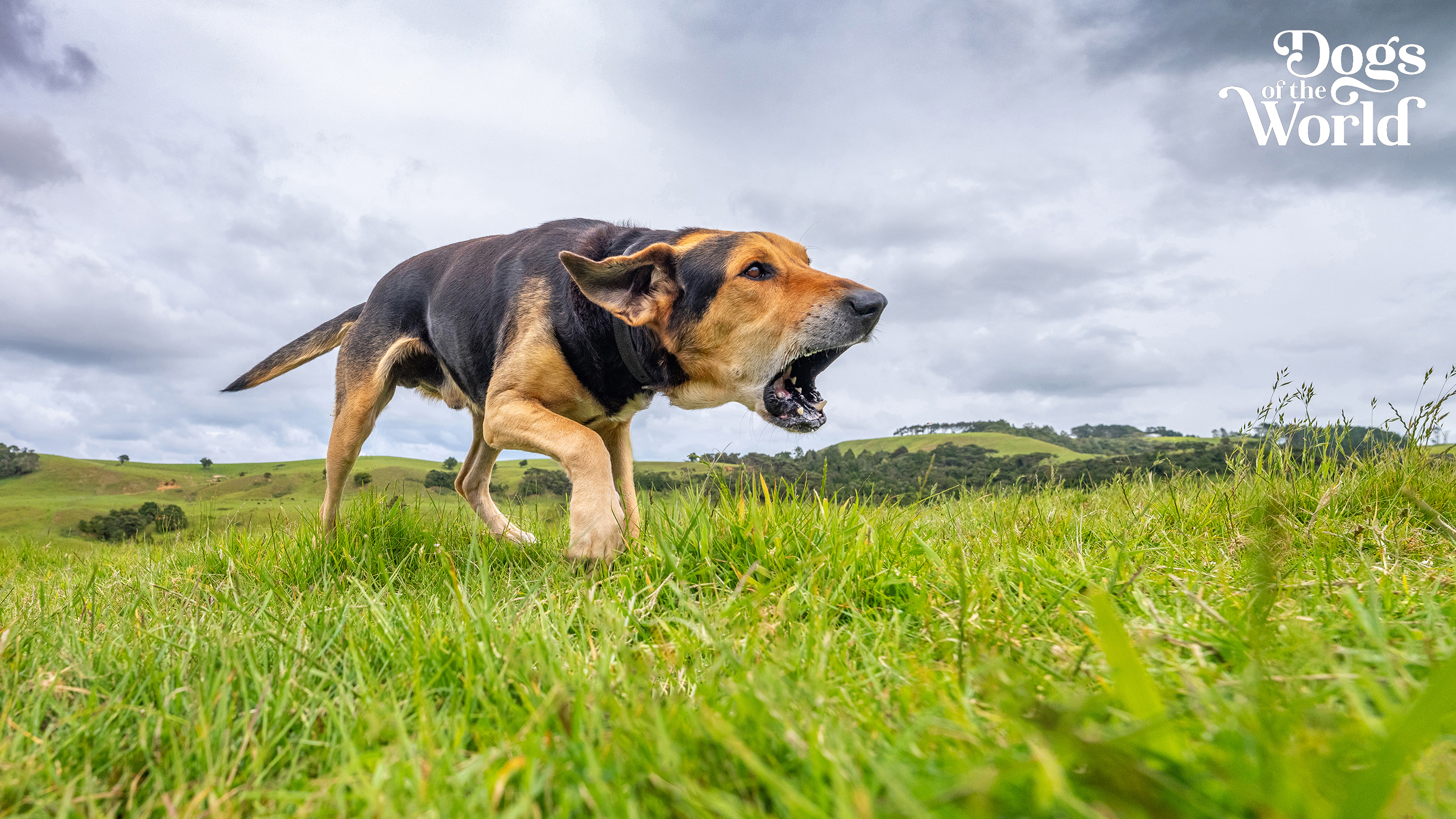 Kobe the huntaway, who was bred to use his voice. I may have given him a run for his money on the phone to the shipping company!
As I was making my way back home to sort this out, an agent from an entirely different shipping company called. They had packages for me and I needed to pay further import duties to release them. Thank goodness for that, they were not far away. They arrived a few days later, after I'd left for the trip. My friend unpacked everything, checked it over and sent me photos of how it all looked. Even through her photos, I could tell the prints looked fabulous. Hurrah, panic over and all that.
If you're importing prints, here are some things I'd pass on:
- A big order can arrive in several boxes, so ask your shipper or check your invoice for how many packages to expect. Mine all shared one tracking number, so I assumed they were all with the same shipping company. They weren’t.
- A split shipment can mean paying import duties more than once, as I found out
- If you're not home to receive the delivery, have a trusted person receive it for you, and if you're away, they can unpack and inspect everything too
- Most courier companies will return packages to sender surprisingly quickly (three days in some cases) if you don't contact them and rearrange delivery
- Most importantly, try not to panic!
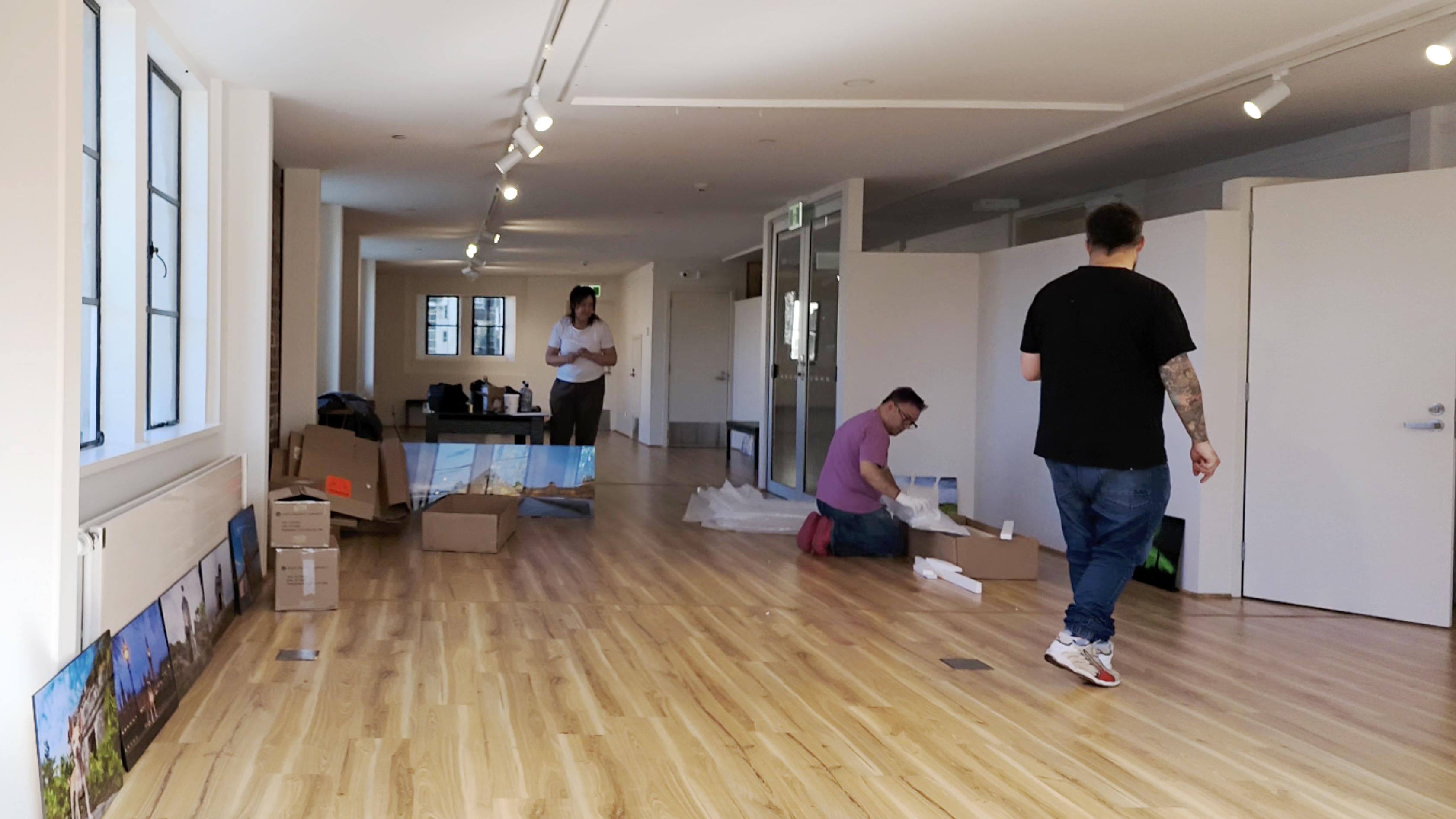 Unpacking the prints with the help of Chris and Shar.
The week before I left
Just over a week before I flew out to the Unleashed Workshops, I ended up being rushed to the emergency department, which resulted in me spending a week in hospital. I'm okay now, but I do have surgery ahead of me on my C6 and C7 vertebrae. If you've read the introduction to the book you'll know my spine has history, so this was more inconvenient timing, as always seems to be the case.
It cost me a week of preparation time. I'd planned to start on the marketing and organise the banners for the outdoor promo spaces I'd booked at The Arts Centre, and I simply couldn't. I still needed to book caterers for the open evening, write and print the info cards and get a few other things sorted. My husband Chris stepped up big time, as always. He handled most of the marketing and the banners, dealt with the caterers, ordered the drinks for the opening night and got the printing sorted.
If there's a lesson in all of this, it's to build some extra time into your schedule and to have people around you who you trust enough to hand the job to. Tell them early, and be specific about what "done" looks like. Oh, and if you can, don't leave the big jobs until the last minute (though I'm not sure I could have predicted this one!).
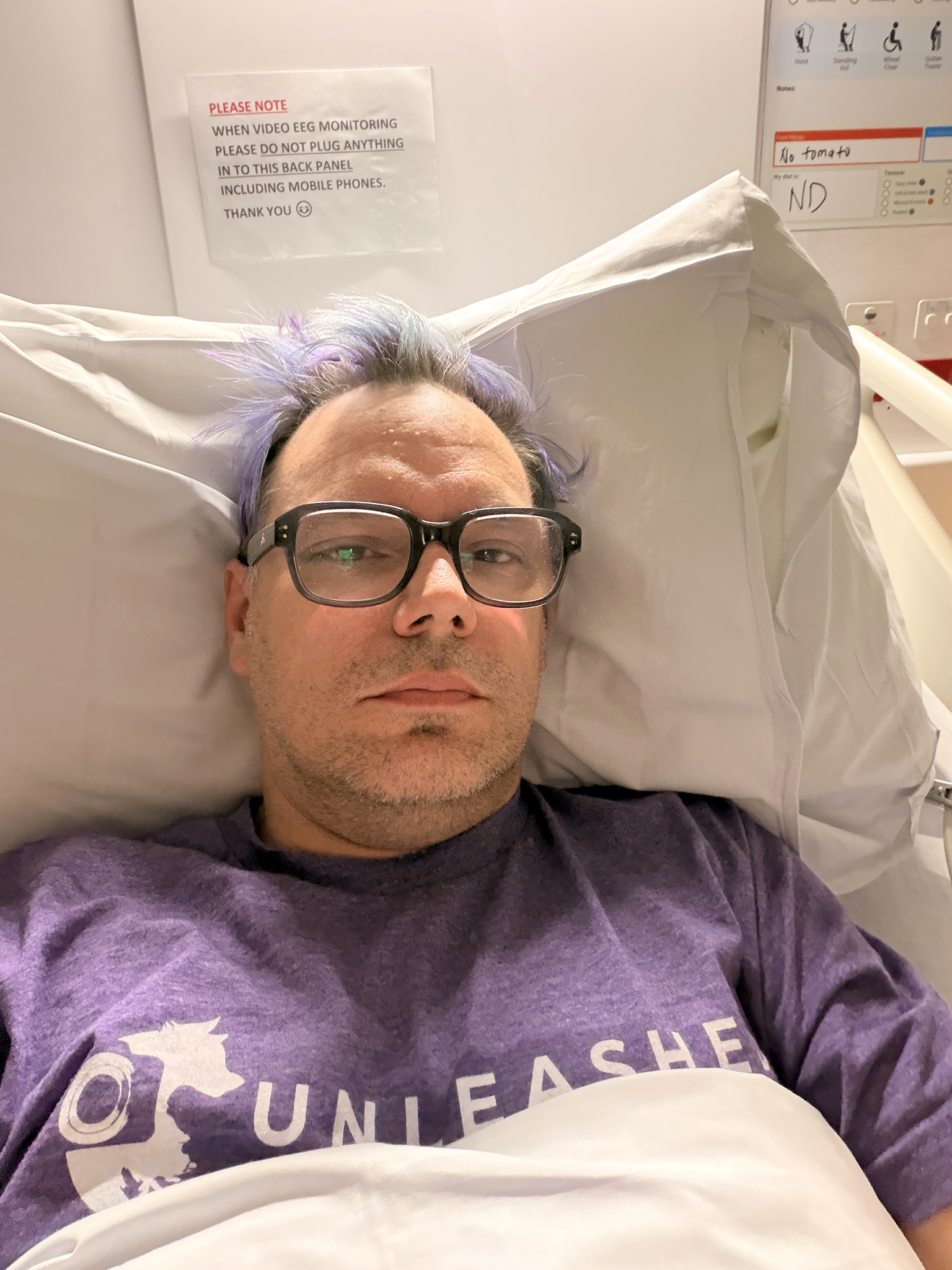 Even in hospital, I'm on brand!
Marketing: simple and (mostly) free
In the end, I kept the marketing simple. I shared information about the show on my social media, and I used the additional promotion options The Arts Centre offers around the venue, including external banners that faced busy streets. I sent a press release out the week before opening, which picked up some local coverage, including with local news broadcaster Chris Lynch, who has a really large audience, and Metropol magazine, who are also local. I also got the show listed on local events websites including ChristchurchNZ What’s On, the City Council's website and Eventfinda, all of which offered free listings. I didn't get around to sending an email campaign I had planned.
View this post on Instagram
The teaser reel I shared on Instagram and Facebook.
I was never keen on putting the whole show online: if every piece is already available to view on someone's phone, they're less likely to walk through your door. I just shared one teaser reel on Instagram and Facebook and that was it. Turns out a simple plan was enough, more of that in Part 3.
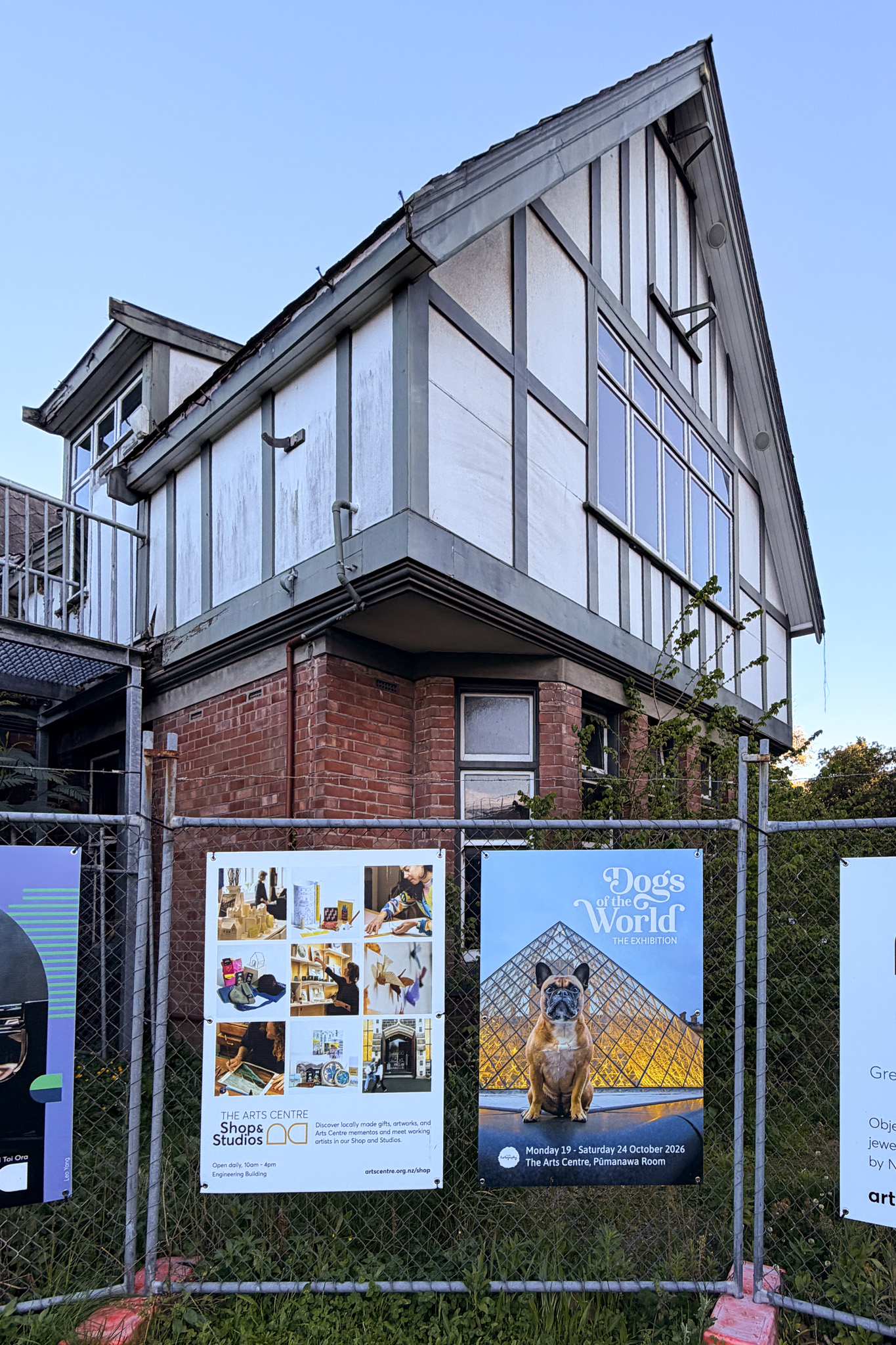 I paid a little extra to have a large banner outside The Arts Centre on a busy road (and printed the wrong closing date, duh!)
Build day
I arrived back from the workshops on Sunday morning and went straight into packing the car, printing a couple of extra posters, packing prints and signing books for the start of the exhibition the following day. Not a bad way to kick the jet lag in the arse!
We'd announced an opening time of 1pm on the Monday. With the venue available from 9am, that gave us four hours to unpack, set up and hang everything. People were knocking on the door all day long asking when we'd be open, and it took far longer than I expected to get ready. Once the last piece was up, The Arts Centre team did their pre-opening inspection and adjusted the lights, and we finally opened the doors at 2:30pm.
I couldn't have done it without help from my friends Shar and Jo, and Chris of course, while Linda looked after the dogs at home all week. I'm so grateful for the help and support.
A little timelapse of the exhibition setup.
The venue would actually have let me keep the Monday closed to the public while I set up, but I'd already announced a 1pm opening. So with those lessons learned, my advice is to double your hanging time estimate, just to be on the safe side. Maybe even consider opening the following day, so you have a full day to set up.
About those hooks
The hanging system was the scariest part at The Arts Centre. We were only allowed to use some very dubious-looking hooks they provided, with fishing wire tied to them. They were an old-fashioned design with a double claw that hooked over the picture rails. It took a bit of time to work out how best to tie the fishing wire so it was secure. The big piece of English weighs about 6 kilos, so I made sure to buy a stronger fishing line that could hold up to 15 kilos. Once we got the hang of the hooks, wire and how to space everything, it wasn't too tricky.
Though I confess that night I dreamt that I arrived the next morning and every piece was smashed on the floor. Coincidentally, when Jo arrived she said she'd had the same dream! Fortunately, in the real world, there were no casualties.
Heritage venues have rules for good reasons (remember I couldn't use nails or screws anywhere, and nothing stuck with tape or Blu Tack to the brick walls), so I'm not suggesting you try to get around them. What I would do is ask early exactly what hanging hardware you'll be allowed, and make sure you know how heavy your pieces are before you arrive so you can take the correct materials with you.
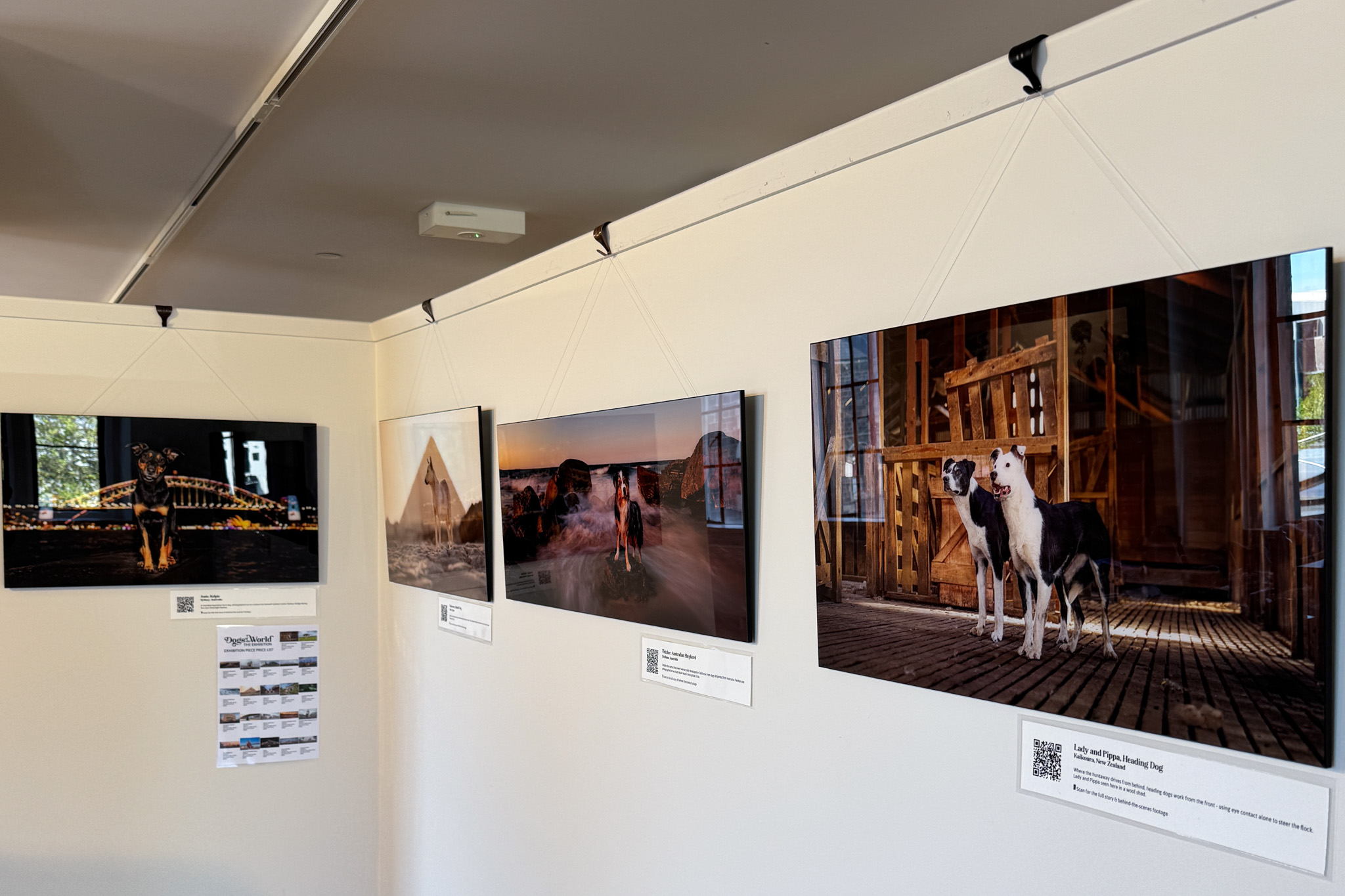 Here you can see the nightmare-inducing hooks and wire!
The moment it all came together
Despite all that, once hanging was complete and we all looked at the images on the walls, it became clear how fantastic it all looked. I got a little emotional (surprise, surprise), and not for the last time during that week either. One lovely little thing I noticed, completely by coincidence: the first image we hung for the exhibition was the oldest image in the book, the heading dogs, and the last was English, who wasn't the final image I took for the book but was taken on my final book trip. All in all I felt a real sense of pride in what we'd done with the space and how beautiful the images looked.
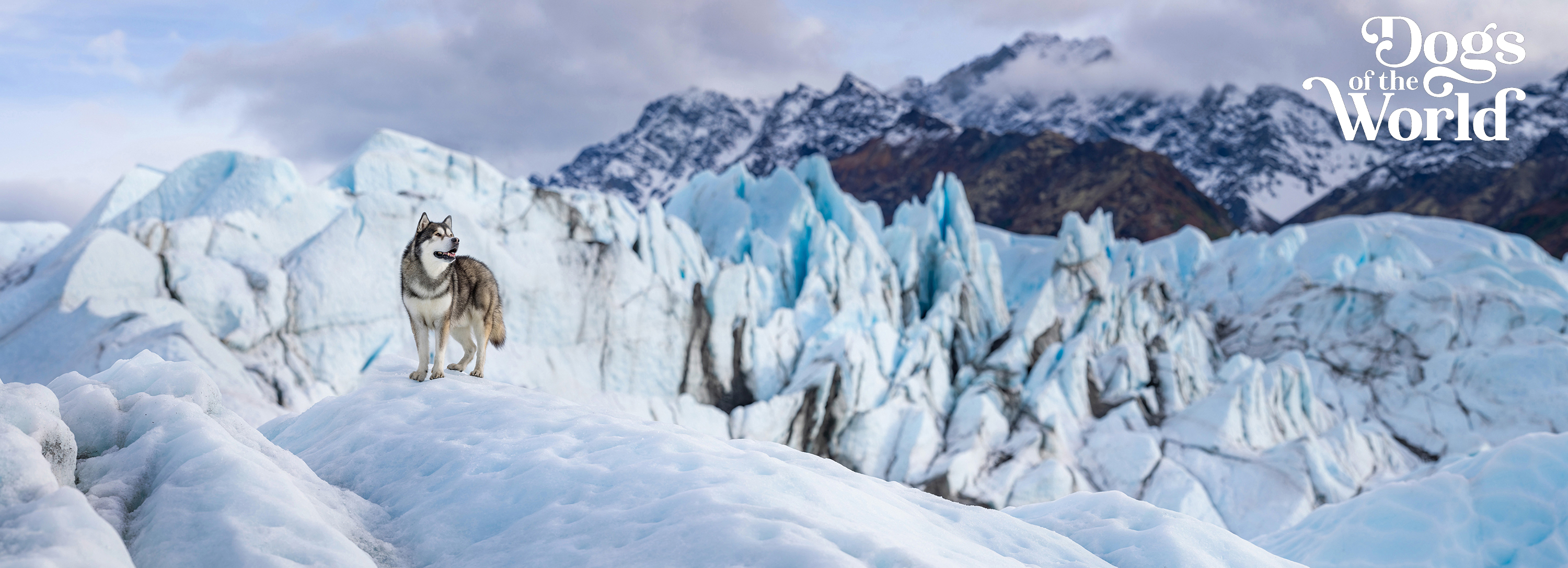
Hatcher the Alaskan malamute on Matanuska glacier, Alaska. One of the 20 images hung between the heading dogs and English.
What I'd tell past me
- Check how many packages to expect and which shipping companies are handling them, and perhaps even ask your printer to send everything with one company
- Have someone you know receive and check your exhibition pieces if you're away or your exhibition isn't in your local area
- Keep marketing simple, use or hire the venue's promotion spaces where you can, and list your show on free local event websites
- Enlist help from family and friends, hand over jobs early, and be specific about what "done" looks like
- Allow extra time for set-up, perhaps even double your hanging estimate, and make your opening time realistic
- Ask the venue about hanging hardware before you order your prints, and use fishing line rated well above your heaviest piece
- Tell the venue the moment you've finished hanging, so they can organise the pre-opening inspection and have someone adjust the lights if you aren't allowed to do it yourself
Next up, Part 3: Almost 1,000 visitors, an opening night, a film premiere, and what I'd do differently next time.
Missed Part 1? You can read it here.
Dogs of the World is published by Furtography in association with Sherlock and Co and distributed in New Zealand through Bateman Books. For more on the book check out www.dogsoftheworldbook.com
Join our mailing list!
Want to improve your pet photography with free tips and expert advice?
Join our mailing list and get a guided tour of what we have to offer, along with our weekly newsletter packed with practical pet photography insights.
📩 Sign up now and start learning with us!
We hate SPAM. We will never sell your information, for any reason.